Spotify’s API Shift Opens the Door for DJs, Developers, and New Creative Workflows
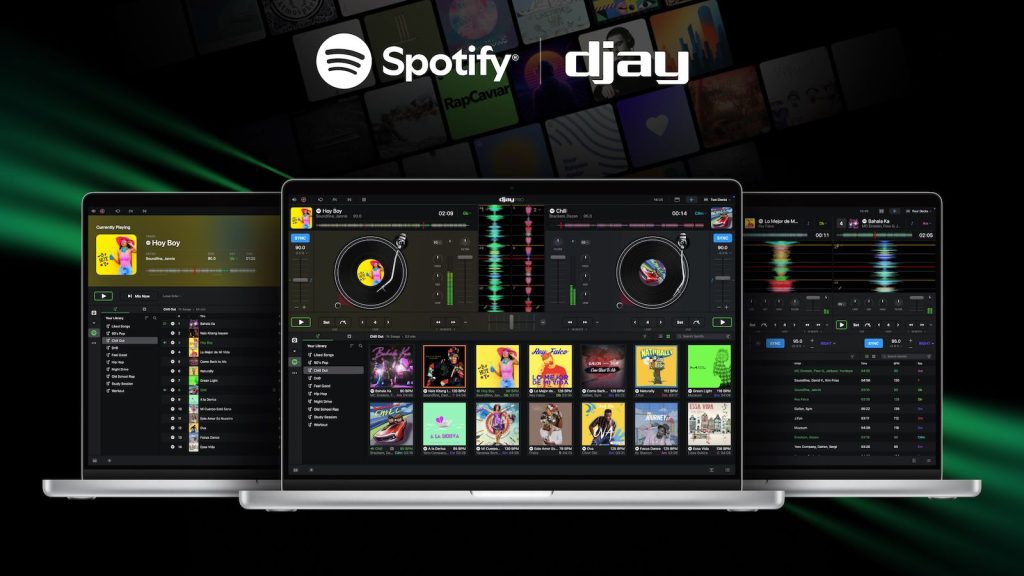
For most people, Spotify is a listening app. For developers, it’s a platform. And increasingly, for DJs and creators, it’s becoming something closer to live infrastructure. Over the past year, Spotify has quietly but significantly expanded how its ecosystem can connect to other tools. While much of the conversation around APIs focuses on developers and data access, one of the most interesting changes is happening at the creative edge: Spotify can now connect directly to professional DJ software like Serato DJ Pro and djay Pro.
From Closed Gardens to Connected Systems
Historically, Spotify kept a firm boundary between streaming and performance. DJs couldn’t legally or technically mix Spotify tracks inside their software, even if their playlists lived there. That separation made sense from a licensing standpoint, but it also created friction for creators who curate, remix, and perform music rather than just consume it.
Recent changes suggest a philosophical shift. Spotify is no longer treating itself as a sealed product, but as a service layer—something that can plug into other environments securely, intentionally, and at scale.
For developers, this mirrors what’s happening across modern software: APIs aren’t just about raw data anymore. They’re about controlled interoperability. We are BIG, BIG fans of APIs and what they let us do with web development.
What DJ Integrations Actually Enable
With Spotify integrations in tools like Serato DJ Pro and djay Pro, DJs can now:
- Access their Spotify playlists directly inside DJ software
- Search Spotify’s massive catalog without switching apps
- Mix streaming tracks alongside local music libraries
- Build live sets based on playlists already curated in Spotify
This dramatically lowers the barrier to entry for hobbyist DJs, mobile performers, and creators who live primarily in streaming ecosystems. Your Spotify playlists stop being static collections and start becoming performance-ready assets.
There are still constraints—an internet connection is required, and some advanced remixing features are limited—but the direction is clear. Spotify is positioning itself as a foundation, not just a destination.
Why This Matters Beyond Music
From a web design and development perspective, this is the real story.
Spotify’s move reflects a broader trend we see across platforms:
- Software becoming modular
- Experiences spanning multiple tools
- APIs acting as bridges, not pipes
The same logic applies to websites, CRMs, e-commerce platforms, booking systems, and content tools. Businesses increasingly expect their digital systems to talk to each other—cleanly, securely, and without custom duct tape.
At Traverse City Web Design, we see this every day. Clients aren’t asking for “a website” anymore. They’re asking for systems that connect—to scheduling tools, payment platforms, analytics, marketing software, and now, increasingly, AI and media services.
Spotify just happens to be a very visible example of this shift – and one we applaud.
For Michigan businesses looking to move beyond brochure websites and into truly connected digital systems, this is exactly where Traverse City Web Design shines. We build modern, API-driven websites that don’t just look good, but talk to the tools your business already relies on—CRMs, booking platforms, payment processors, marketing automation, analytics, AI services, and custom integrations tailored to how you actually operate.
Whether you’re a Northern Michigan startup or a statewide organization ready to scale, we design websites as living infrastructure, not static pages. The result is a site that works harder, connects smarter, and grows with your business.