What Is AEO (Answer Engine Optimization)? : New Era of SEO for Web Designers
Search Engine Optimization (SEO) has been the foundation of how websites are discovered online for more than two decades. At Traverse City Web Design, we’ve seen firsthand how vital SEO is to the success of Michigan businesses—whether it’s helping a local law firm reach new clients, a bakery grow its online orders, or a library make its resources more accessible.
But the landscape is shifting fast. The familiar world of blue links on Google’s search results is giving way to a new reality where people don’t just search—they expect direct answers. As search engines evolve into answer engines, a new discipline is emerging: Answer Engine Optimization (AEO).
AEO focuses on ensuring that your content doesn’t just rank—it answers. This change is being driven by voice assistants, AI-driven search tools, and Google’s Search Generative Experience (SGE), all of which are reshaping how results are displayed and consumed. For web designers and content creators, this isn’t just a trend—it’s a fundamental shift in how websites need to be built and written if they’re going to remain visible, competitive, and useful in the years ahead.
How AEO Differs from Classic SEO
To understand why Answer Engine Optimization matters, it helps to look at how it compares to the SEO we’ve relied on for years. Traditional SEO has always been about building visibility—making sure your website ranks high enough in Google’s search results to earn clicks. But with the rise of AI-driven search and voice assistants, the rules have changed.
Instead of simply competing for position on a results page, websites now need to compete for the role of the answer. That shift is what separates AEO from classic SEO. Where traditional SEO focused on keywords, backlinks, and ranking signals, AEO emphasizes clarity, context, and structured content that AI systems can understand and deliver instantly.
Traditional SEO:
- Relies heavily on keywords, backlinks, and structured site architecture.
- Aims to earn top rankings in search engine results pages (SERPs).
- The focus is on visibility—getting clicks from listings on Google.
Answer Engine Optimization:
- Focuses on providing direct, clear, and authoritative answers.
- Structured data, conversational phrasing, and semantic context matter more than raw keywords.
- The goal isn’t just to rank but to be the answer when a user asks a question via voice search, AI chatbots, or search assistants.
- Instead of chasing the blue links on Page One, AEO aims for featured snippets, AI-generated answers, and voice responses.
In short: SEO got you seen, AEO gets you chosen.
Why AEO Matters for Web Designers
So why should web designers care about Answer Engine Optimization? After all, SEO is often seen as the responsibility of marketers and content creators. But in the new search landscape, the way a site is designed has just as much impact on whether it gets discovered as the words on the page. AEO isn’t just about fine-tuning content—it’s about how design, structure, and usability work together to deliver clear, accessible answers that search engines and AI assistants can trust.
Here’s why it matters:
- Voice Search Is Exploding
Devices like Alexa, Siri, and Google Assistant don’t return a page of results. They return one answer. If your site isn’t structured for AEO, you may never be heard. - AI-Powered Search
Google’s SGE and Bing’s AI-enhanced search are already pulling content into conversational summaries. If your website doesn’t have scannable, structured, high-authority answers, it won’t be featured. - User Expectations
People no longer want to click through three layers of navigation to find an answer. They expect websites to state it clearly and quickly. That changes how we design landing pages, FAQs, and even blog articles. - Local & Niche Advantage
For local businesses, AEO is a game-changer. A Traverse City bakery, for example, can capture voice searches like “Where can I buy fresh sourdough in Traverse City?” if its site is optimized for natural-language answers.
How Web Designers Should Think About Content in the Age of AEO
For years, web designers have focused on aesthetics, usability, and performance—making sure sites look professional, load quickly, and work seamlessly on every device. While those fundamentals remain crucial, the rise of Answer Engine Optimization adds a new layer of responsibility. Today, design and content aren’t separate silos; they work together to determine whether a website can provide the kind of clear, structured answers that AI-driven search tools prefer.
That means designers need to think differently about how content is organized, presented, and supported by the site’s technical framework. It’s no longer enough for a website to simply look polished—its layout, navigation, and copy must anticipate how both users and machines consume information. In the age of AEO, web designers who understand content strategy will have a significant advantage, creating sites that are not just beautiful, but also discoverable, conversational, and future-ready.
AEO isn’t just about keywords. It’s about clarity, structure, and intent. Here’s how designers and developers can future-proof sites:
1. Design for Questions, Not Just Keywords
- Structure content around who, what, where, when, why, and how questions.
- FAQs, product pages, and service descriptions should use conversational phrasing.
- Example: Instead of “Web Design Traverse City”, use “Who provides professional web design in Traverse City?”.
2. Emphasize Structured Data (Schema Markup)
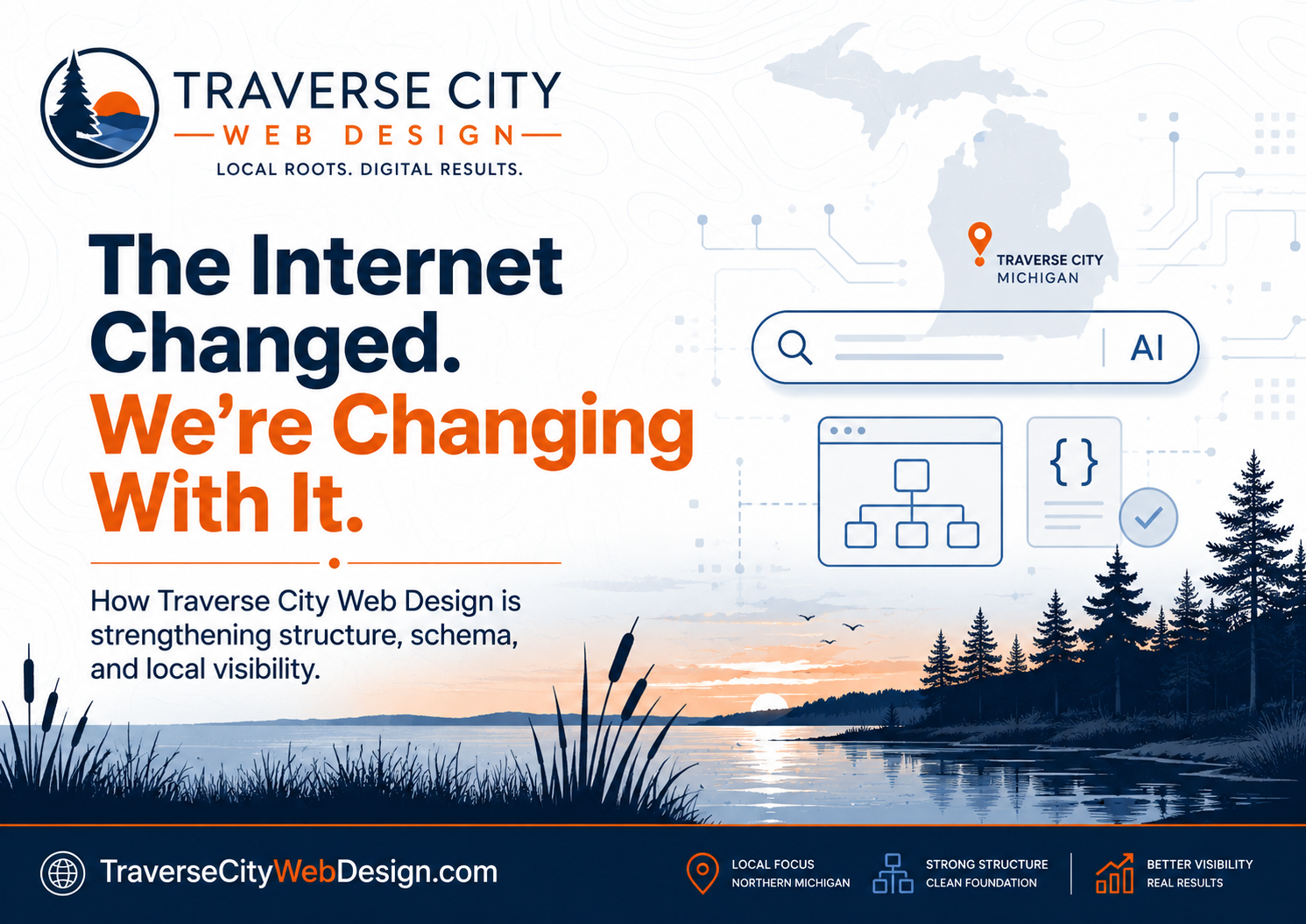
- Use schema to label FAQs, reviews, products, services, and events.
- This helps search engines understand context and serve your content as an authoritative answer.
3. Create Scannable, Modular Content
- Use headings, short paragraphs, and bullet lists.
- Think of how AI parses text—it favors clarity and concise formatting.
- A well-structured FAQ page can become your biggest AEO asset.
4. Prioritize Page Speed & Accessibility
- Voice assistants and AI engines prefer content that loads fast and is mobile-friendly.
- Accessibility features like alt text, ARIA roles, and clear navigation also improve crawlability.
5. Blend Design With Content Strategy
- Encourage clients to provide detailed, direct answers within their site copy.
- Instead of fluff, focus on practical, authoritative statements.
- Example: A law firm site should answer “How do I hire a trial attorney in Michigan?” right on the homepage.
6. Think Conversational & Contextual
- AI systems look for content that mimics human conversation.
- Write in natural language, anticipating follow-up questions.
Why Web Designers Hold the Key to AEO Success
The role of the web designer has changed dramatically. It’s no longer enough to simply deliver a site that looks sharp and functions smoothly. In the new age of search, design is strategy. The way a website is built—its structure, navigation, speed, and even the way information is arranged on the page—directly influences whether search engines and AI-driven tools recognize it as a credible source of answers.
This shift means web designers are now central players in SEO and AEO success. Every design decision, from the placement of headings to the use of structured data, shapes how visible and authoritative a site becomes in an answer-driven search world. Clients may see “design” as just colors and layout, but behind the scenes, designers are laying the foundation that determines whether their business is discovered—or overlooked—online.
In practice, this means:
- Building sites with FAQ-rich structures.
- Making sure metadata and schema are baked in from launch.
- Designing for fast, clean, and accessible experiences.
- Collaborating with writers and SEO specialists to ensure the site’s language fits the AEO model.
Conclusion: AEO Is the Future of SEO
As the web moves into the age of AI and voice-driven search, Answer Engine Optimization is becoming essential. For web designers, this is not just an SEO issue—it’s a design issue, a content issue, and a usability issue all rolled into one.
Classic SEO isn’t dead, but AEO is the next layer. The businesses that adapt now—by designing sites that answer instead of just listing—will own the future of search.
If you’re building websites in 2025, you need to ask yourself one question:
“Will my site be the answer?”