Over the years, we’ve learned that one of the best things we can offer up-and-coming web designers is transparency…
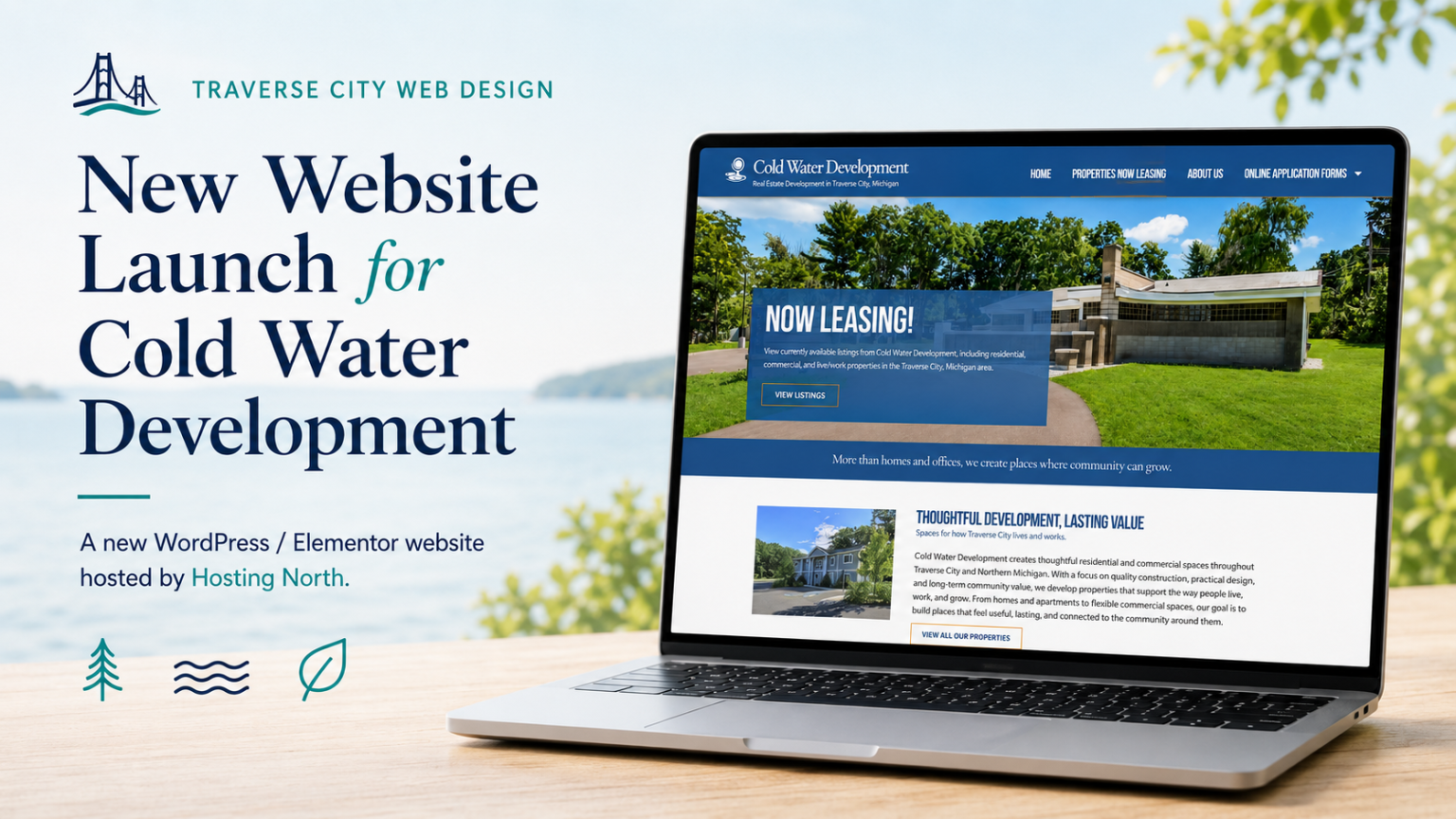
WordPress remains the backbone of everything we build at Traverse City Web Design. It’s the platform that gives us the freedom to craft beautiful, fast, and fully customized websites for Michigan businesses, large and small.
Whether we’re launching a multi-branch library system, a high-traffic WooCommerce store, or a sleek service-industry site, WordPress gives us the versatility to tailor each project without locking our clients into proprietary systems or rigid templates.
Over the years, we’ve learned that one of the best things we can offer up-and-coming web designers is transparency — a peek behind the curtain.
Good tools matter, and knowing why you’re using them matters even more. A modern WordPress site isn’t made of one big monolithic program; it’s built from a carefully chosen ecosystem of plugins, tools, and services that should work together cleanly and efficiently without bloating the site.
In 2026, our plugin stack continues to evolve based on performance, stability, SEO needs, and real-world results from hundreds of client sites. Below is the core set of tools Traverse City Web Design uses daily — a guide meant for rising designers who want to build fast, modern, Michigan-rooted WordPress sites with professional-level results.
WordPress: The Foundation of Everything
We begin every build with WordPress itself — stable, open-source, endlessly flexible, and trusted by millions of businesses worldwide. It allows us to shape content, control design, support accessibility standards, and extend functionality through plugins and custom code. It’s the reliable base where all our other tools connect, and for client flexibility, nothing beats it.
Michigan-Based Hosting in Ann Arbor
We prefer to keep our websites close to home. By hosting on high-quality servers located in Ann Arbor, our clients benefit from Michigan-based speed, lower latency, and the comfort of knowing their sites are running locally rather than on distant data centers. “Keep it in Michigan” isn’t just a slogan — it’s a performance choice.
Elementor: Our Primary Design System
Elementor is the design backbone of almost every site we create. It gives us deep layout control, precise spacing, flexible typography, and the reliability we need when building visually rich pages. While Elementor handles most of the design work, we often write custom CSS to polish the look, correct spacing, or stylize unique elements. This blend of builder plus code helps us hit the exact aesthetic our clients expect.
Hello Elementor Theme & Our CSS Workflow
For nearly all of our projects, we pair Elementor with the “Hello Elementor” theme. Hello is essentially a blank canvas — a minimal, stripped-down theme that stays out of the way and lets Elementor handle layout and design. Because it doesn’t load a lot of extra styling or layout rules, it keeps our sites lighter, faster, and easier to control visually. That blank-canvas approach gives us a clean foundation for custom design work.
Just as importantly, we avoid directly modifying any core WordPress files, theme files, or plugin files. Instead, we rely on the Inspector tools in our web browser (we use Firefox) to see exactly which CSS is affecting a given element. Once we know which rules are in play, we override those styles using Elementor’s custom CSS panel rather than editing files on the server. This approach keeps updates safe, makes our work more maintainable, and ensures that plugin and theme updates don’t overwrite our customizations.
123RF and Pexels: Our Visual Toolbox
For images and video, 123RF.com remains our go-to subscription library. Its selection, resolution, and reliability make it perfect for highly polished client materials. When we want something more indie, raw, or candid — especially for blog posts, social ads, or lifestyle imagery — we turn to Pexels.com. Its “amateurish” charm can add authenticity to the right project.
Rank Math: Our SEO Workhorse
Rank Math is our SEO plugin of choice because it offers exceptional control even in the free version — schema options, metadata tools, sitemap control, redirects, and more. For WooCommerce sites, we use Rank Math Pro, which unlocks additional features tailored to product-based SEO and large category structures. It’s powerful, flexible, and integrates beautifully with our workflow.
WooCommerce: The eCommerce Engine We Love
WooCommerce is our preferred eCommerce platform — endlessly customizable and fully integrated into WordPress. Yes, it’s complex. Yes, it requires experience. But when used correctly, it becomes a powerhouse capable of supporting stores with hundreds of products, variable pricing, automation, and deep marketing integrations. For payments, we rely on Stripe and PayPal, which consistently deliver secure, seamless checkout experiences.
Email Integration: Mailchimp, iContact & Constant Contact
For our own marketing, we use Mailchimp because it offers excellent automation tools and integrates tightly with WooCommerce. For clients, we also support iContact and Constant Contact — especially when they already have subscriber lists there. Many of our eCommerce sites use custom automations to sync WooCommerce customer activity with their preferred email platform for newsletters, receipts, abandoned cart sequences, and long-term engagement.
Google Site Kit & WP-Statistics: Dual Analytics
We install both Google Site Kit and WP-Statistics on almost all sites. Every analytics tool uses slightly different methodologies and algorithms, so having two data sources gives a more accurate overall picture. Google provides big-picture insights; WP-Statistics offers immediate on-site visibility without relying entirely on external platforms.
Bertha AI & ChatGPT: Two Different Roles
Bertha AI is excellent for quick, structured eCommerce product descriptions — especially when a store has dozens or hundreds of SKUs. ChatGPT handles the longer-form creative work: blog posts, storytelling, SEO articles, and social media writing. Each tool has its sweet spot, and using them together lets us work efficiently without sacrificing quality.
Smush: Image Optimization for High-Content Sites
Smush is on every WooCommerce site we build because product photography can balloon file sizes quickly. Smush compresses and optimizes images without noticeable quality loss, helping keep stores fast and Google-friendly.
Advanced Database Cleaner PRO
We use Advanced Database Cleaner PRO to keep site databases healthy. It’s extremely powerful — and should be used carefully — but it allows us to remove orphaned data, expired transients, leftover plugin tables, and general clutter. It gives us far more control than phpMyAdmin while keeping everything within the WordPress dashboard. Backups are a must before using it, but the results are consistently excellent.
JetMenu by Crocoblock: Mega-Menus Made Easy
JetMenu is our favorite mega-menu builder because it integrates directly with Elementor. It lets us build highly customized navigation systems: multi-column menus, icons, descriptions, featured images, and unique layouts. If a client needs complex navigation — like a library system, eCommerce store, or large corporate site — JetMenu gives us the control we need.
Other Plugins We Trust
Some plugins don’t need long explanations — they simply belong in every professional toolkit. These include:
- WP All Import
- AI Engine (Meow Apps)
- WordFence
- Really Simple Security
- Cloudflare
Conclusion
The plugin ecosystem we use at Traverse City Web Design isn’t random — it’s the result of years of testing, refining, and seeing what actually works for Michigan businesses. Every plugin in our 2026 stack has been chosen for stability, security, speed, and long-term reliability. When these tools are combined with solid hosting, careful design work, and thoughtful SEO strategy, the result is a WordPress site that performs beautifully for years.
We share this list for up-and-coming designers because good tools lead to good craftsmanship. Learning why a plugin belongs in a stack — and what problem it solves — is the foundation of professional web design. These are the tools that power real projects, real stores, and real organizations across the state.
As WordPress continues evolving in 2026, we’ll keep experimenting, improving, and updating our stack. But this foundation remains solid, and we hope it helps new designers build confidently, creatively, and with the kind of Northern Michigan pride that drives everything we do.