For small businesses in Michigan, getting found on Google isn’t just important—it’s essential. Whether you run a coffee shop in Petoskey, a law firm in Traverse City, or a boutique in Charlevoix, your potential customers are searching online first. And in 2025, artificial intelligence is changing how those searches work.
This guide will walk you through the fundamentals of Local SEO (Search Engine Optimization) and how AI-powered search is shaping the way Michigan businesses get discovered.
What Is Local SEO—and Why It Matters in Michigan
Local SEO is the process of optimizing your website so it appears when people nearby search for your products or services. For example, if someone types “best web designer in Traverse City” or “pet-friendly hotel near Glen Arbor,” Google uses location data, business listings, and content relevance to decide who shows up first.
For Michigan small businesses, this is crucial. Local SEO puts you in front of customers who are ready to buy—often within hours of searching.
The AI Shift in Local Search
Google’s search results are no longer just “ten blue links.” With AI-powered features like Google’s Search Generative Experience (SGE) and AI-driven map packs, the algorithm now understands context better than ever. It considers:
- User intent — AI predicts whether the searcher wants information, directions, or to make a purchase.
- Entity relationships — AI connects your business to relevant topics, locations, and categories.
- Natural language queries — People are searching with full questions, like “Where’s the best Michigan web design company that builds WooCommerce sites?”
For Michigan small businesses, this means your content must speak naturally and be rich in local detail—because AI is looking for context, not just keywords.
Local SEO Basics Every Michigan Small Business Should Master
1. Claim & Optimize Your Google Business Profile
Your Google Business Profile is often the first thing people see. Make sure it’s complete with:
- Business name, address, and phone (NAP) consistency
- High-quality photos of your products, services, or storefront
- Updated hours (including seasonal changes)
- Posts about events, promotions, or local news
2. Target Location-Based Keywords
Include phrases that pair your service with Michigan towns and regions. For example:
- “Michigan Web Design for Small Businesses”
- “Traverse City SEO Services”
- “Petoskey Coffee Roasters”
AI-powered search will use these to match your business to relevant local queries.
3. Create Locally Relevant Content
Write blog posts or service pages about:
- Local events you sponsor
- Case studies featuring Michigan clients
- Seasonal tips for customers in Northern Michigan
4. Build Local Citations & Links
Make sure your business is listed in Michigan-specific directories, local chambers of commerce, and industry sites. Backlinks from local news articles or community websites can boost your visibility.
5. Encourage and Respond to Reviews
Positive Google reviews increase your credibility—and AI now uses review sentiment in ranking decisions. Respond to reviews promptly and professionally.
How AI Will Continue to Shape Local SEO
As AI integrates deeper into search, expect more voice-driven and conversational queries. Someone might ask their phone, “Find me a Northern Michigan website designer who understands tourism marketing.” AI will pull results from businesses with well-structured, locally relevant content.
Michigan businesses that adapt early—by speaking the language of their customers and making their online presence rich in local detail—will have a major advantage.
The Takeaway
Local SEO is no longer just about stuffing keywords into a page. In the age of AI, it’s about creating a complete, trustworthy, and locally connected online presence. For Michigan small businesses, that means pairing solid Local SEO fundamentals with content that’s authentic, relevant, and geographically specific.
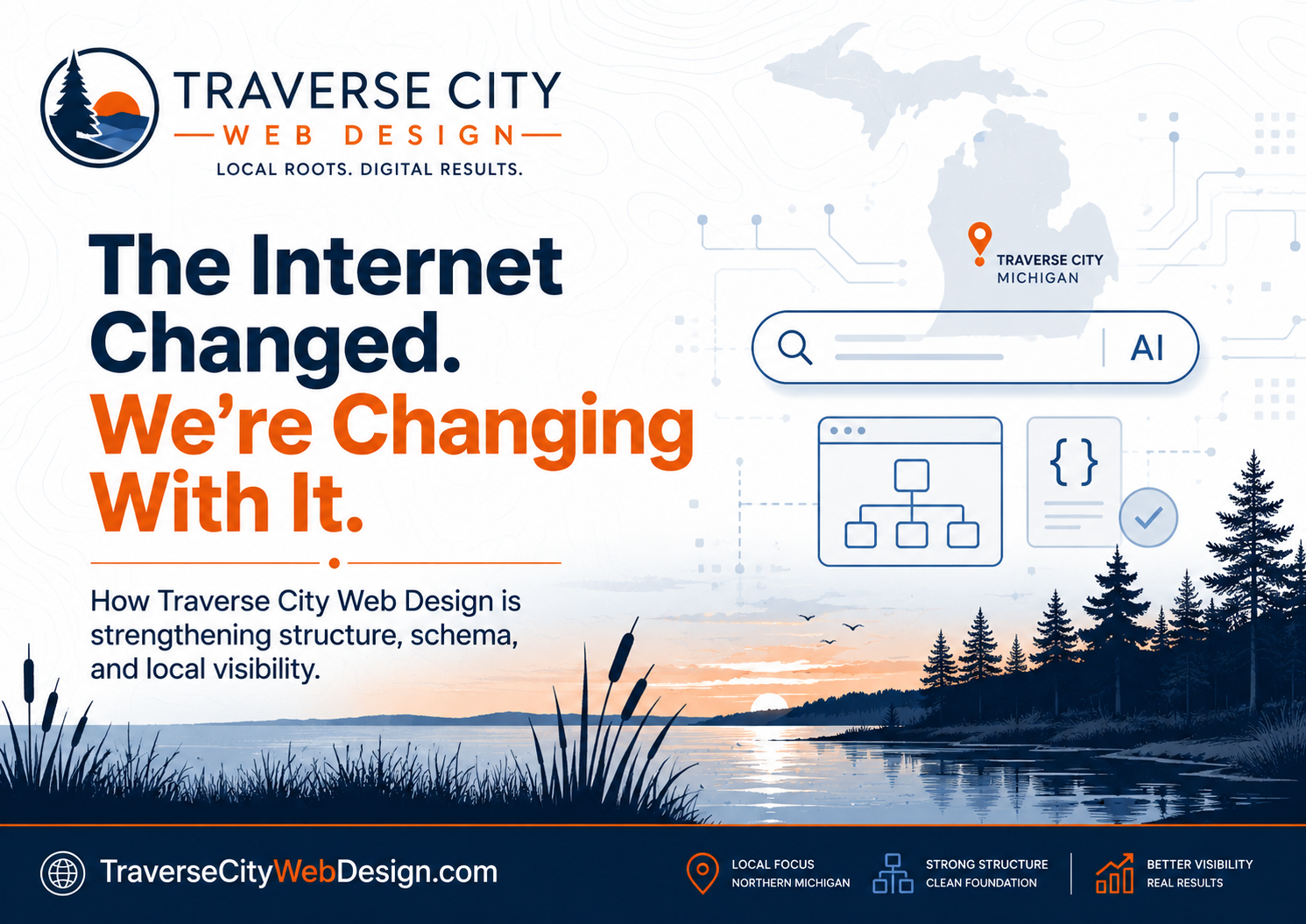
If you want your business to stand out in Google’s AI-driven search results, Traverse City Web Design can help. We specialize in Michigan Web Design and SEO strategies that put small businesses on the map—literally.