Because we design, build, host, and manage websites, our relationship to carbon is not abstract.
Websites live on servers, servers live in data centers, and data centers draw power around the clock. Every site we launch and every hosting environment we maintain has an energy footprint attached to it.
At Traverse City Web Design, that reality shapes how we think about sustainability. We actively look for environmentally conscious server infrastructure that prioritizes efficiency, modern hardware, and responsible energy use, and we pair that with a careful approach to offsetting the energy our sites still consume.
Carbon credits, when used properly, become part of a broader strategy: reduce what we can through smarter infrastructure, then responsibly address what remains. This guide grew out of that practical need—to understand how to do this legitimately, document it clearly, and talk about it honestly without drifting into vague or misleading claims.
Carbon credits are one of those climate tools that can be powerful, useful, and also wildly misunderstood—sometimes by the same company! This guide is built for small businesses that want to subscribe to carbon credits (monthly/quarterly/annually), do it legit, and communicate it without greenwashing or accidental nonsense.
1) What Is a Carbon Credit
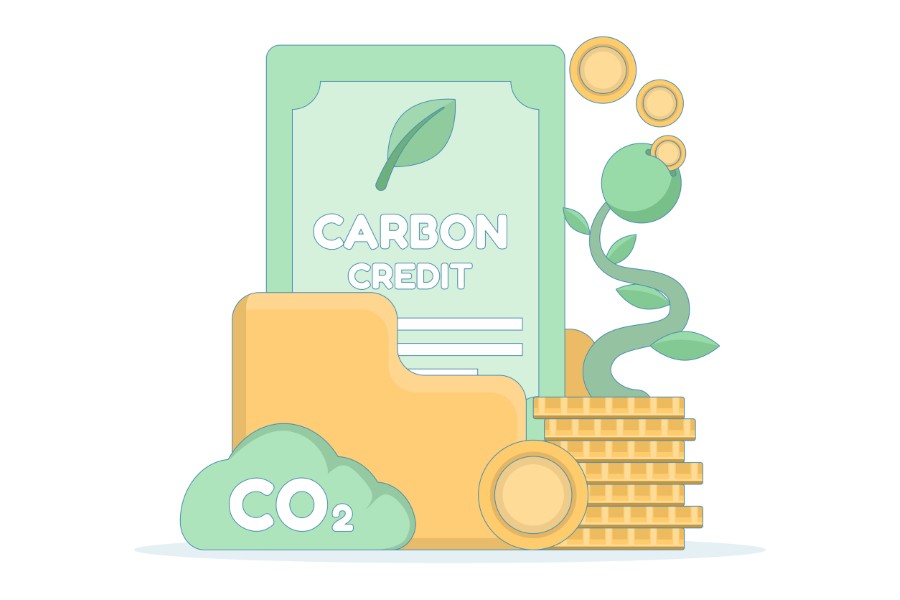
A carbon credit is typically a certificate representing one metric ton of carbon dioxide equivalent (tCO₂e) greenhouse gas emissions that have been reduced, avoided, or removed through a verified project somewhere else in the world. “CO₂-equivalent” matters because carbon dioxide isn’t the only greenhouse gas that affects the climate. Gases like methane and nitrous oxide trap heat much more efficiently than CO₂, so their climate impact is converted into a common unit—tCO₂e—based on how much warming they cause relative to carbon dioxide over time.
When a carbon credit is issued, it means a real-world activity has been measured and verified to deliver a climate benefit equal to one metric ton of CO₂e. That benefit might come from preventing emissions that would have occurred (such as capturing methane from landfills or replacing coal power with renewable energy), or from removing carbon from the atmosphere and storing it in a more durable form.
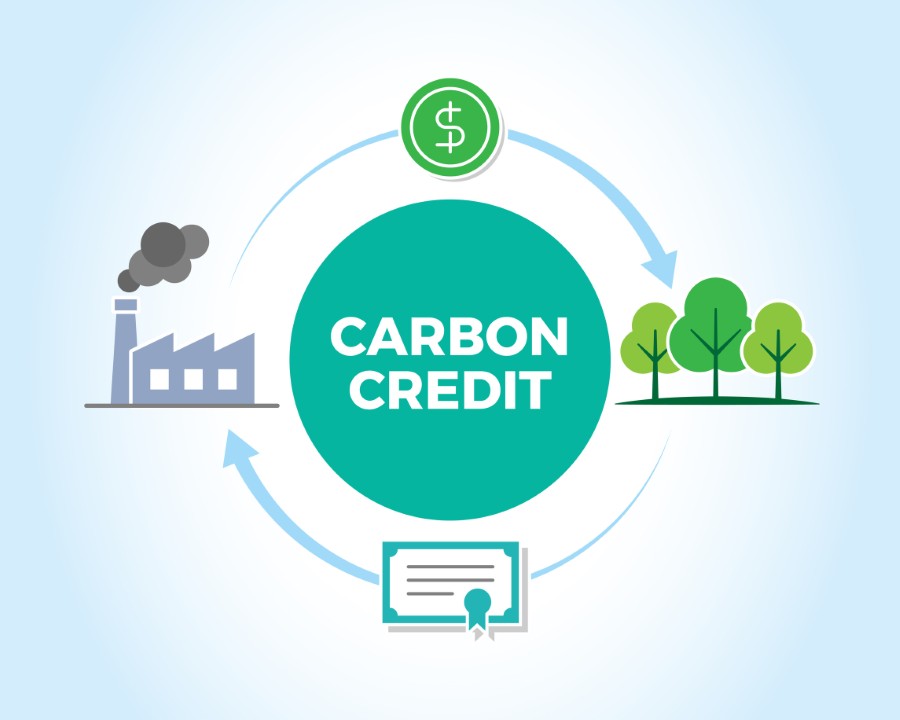
Because the emission reduction or removal happens outside your own operations, carbon credits function as a way to financially support climate-positive projects while accounting for emissions you haven’t yet been able to eliminate. They are basically a well-monitored donation to a climate product.
The credit itself doesn’t reduce your emissions directly—it represents your contribution to a verified reduction or removal elsewhere, tracked through formal standards and registries to ensure it’s only counted once.
- Reduced/avoided: prevents emissions that would have happened (e.g., capturing methane from landfills, cleaner cooking technologies).
- Removed: pulls CO₂ out of the atmosphere and stores it (e.g., durable removals like biochar, mineralization, direct air capture—quality varies).
The core idea: you fund a real-world project, and in return you get credits that (if high-quality and properly “retired” or legitimized by a proper institution) you can use to claim you compensated for some amount of emissions that your business creates.
For Traverse City Web Design (and our website management company, HostingNorth.com), we use data centers to host our websites. Because we are pulling energy from the power grid to do that, we can give energy back to the grid by supporting environmentally friendly projects like wind farms or solar arrays. If it costs us $2 a month in energy to run a website, we can donate $2 a month to a carbon credit project whose work offsets the power consumption we are using for our sites.
2) The Lifecycle: How Carbon Credits Actually “Work”
The typical flow for an environmentally friendly project to register for carbon credits looks like this:
- A project is developed under a recognized carbon standard (rules + methodology).
- The project’s emissions impact is measured and verified by an independent auditor (third-party validation/verification).
- Credits are issued into an official registry with unique serial numbers.
- Credits can be sold or transferred between registry accounts.
- When a buyer uses credits to support a climate claim, the credits are retired (taken out of circulation permanently).
Registries are the systems that make carbon credits real, traceable, and trustworthy. They function much like a public ledger or database that records every carbon credit from the moment it is created to the moment it is used. Without registries, carbon credits would be difficult to verify, easy to resell multiple times, and nearly impossible for an outside party to confirm.
In simple terms, a registry answers four basic questions: What carbon credits exist? Who owns them? Have they been used? And can they be used again?
A well-run carbon registry performs several essential jobs:
- It gives each carbon credit a unique identity. Every credit is assigned a serial number (or a defined range of serial numbers). This ensures that one metric ton of emissions reduction is clearly distinguished from every other ton, and that no credit can be duplicated or confused with another.
- It records ownership over time. As credits move from a project developer to a broker, marketplace, or final buyer, the registry keeps a permanent record of who owns them at each step. This creates a clear chain of custody, similar to how financial assets or property titles are tracked.
- It tracks changes in status. Credits don’t just exist in one state. They are issued, may be transferred between accounts, and are eventually retired. Each of these steps is logged, creating an auditable trail that shows exactly what happened to the credit and when.
- It makes retirement permanent and enforceable. When a credit is retired, the registry removes it from circulation so it cannot be sold, transferred, or claimed again. This is what prevents “double use” and ensures that once a credit has been used to support a climate claim, it is effectively locked and gone.
For businesses, this matters because a registry is the difference between a meaningful climate action and a vague claim. If a carbon credit is not tracked and retired in a recognized registry, there is no reliable proof that the emissions benefit you paid for hasn’t already been claimed by someone else.
3) “Subscription” Carbon Credits
Most small businesses don’t purchase carbon credits by negotiating directly with individual wind farms, forestry projects, or clean-cookstove programs. That level of sourcing is possible, but it’s slow, expensive, and usually designed for large corporations with sustainability teams. In practice, small and mid-sized businesses buy credits through intermediaries that bundle projects, handle verification, and manage the paperwork.
The most common routes look like this:
Many businesses use a retail provider or subscription service. You pay a monthly or annual fee based on how much carbon you want to offset, and the provider purchases and retires credits on your behalf. This is the simplest option and works well if you want predictable costs and minimal administration.
Others use a carbon credit marketplace. Marketplaces let you browse different project types—forestry, renewable energy, methane capture, clean water, and more—choose how many tons you want to offset, and purchase credits directly. Retirements typically happen in batches, and you receive documentation after the credits are officially retired.
Less commonly, businesses work with a broker or sustainability consultant. This route is more customized and often used when offsets are part of a larger ESG or reporting strategy. It usually involves higher costs and more overhead, but it can make sense for organizations with specific geographic or project-type requirements.
Regardless of which path you choose, a legitimate carbon credit purchase should always produce real, verifiable proof. At a minimum, you should receive documentation that clearly states:
- the quantity of credits retired, measured in metric tons of CO₂ equivalent (tCO₂e)
- the vintage, meaning the year the emissions reduction or removal actually occurred
- the project name and location, along with the verification standard used
- a retirement certificate or registry link showing the credits were permanently retired and cannot be resold
That last point matters more than people realize. Credits only “count” once they’re retired in a recognized registry. Until then, they’re just inventory. A credible provider makes that retirement visible and traceable, so you can confidently say your business didn’t just buy offsets—it actually neutralized emissions.
The practical takeaway is this: buying carbon credits isn’t about finding a single perfect project. It’s about choosing a trustworthy system that retires verified credits on your behalf and gives you clear, auditable proof that the work was done. Once you have that foundation, carbon offsets become a boring, reliable line item—which is exactly what you want them to be.
4) The “Legitimizing Institutions” That Matter
There’s no single global carbon credit police department. But there are widely used programs and integrity frameworks that act like guardrails.
A) Carbon Crediting Standards + Registries (“Where Do Carbon Credits Come From”)
These aren’t vague “green groups” or marketing collectives—they’re the rule-makers and record-keepers of the voluntary carbon market. Each of these organizations sets strict methodologies for how projects measure emissions reductions or removals, requires third-party verification, and operates a public registry that tracks every credit from creation to final retirement. When a project says it follows one of these standards, it means the math, monitoring, and audits all had to pass real scrutiny. Just as importantly, these bodies make it possible for businesses to buy carbon credits legitimately, because their registries are where credits are issued, transferred, and permanently retired. If a credit isn’t retired in one of these systems, it doesn’t count.
Here are the major ones you’ll see most often, and why they matter:
- Gold Standard: Gold Standard was created to ensure carbon projects deliver real climate benefits and positive social outcomes. Its rules emphasize additionality, transparency, and measurable impact. Credits issued under Gold Standard are tracked and retired in the Gold Standard Impact Registry, which provides clear public proof that a credit has been permanently retired.
- Verra: Verra operates the Verified Carbon Standard (VCS), the largest voluntary carbon program in the world. Its registry tracks the full lifecycle of credits—issuance, ownership transfers, and retirement—using serialized credits that can be independently verified. Most large marketplaces and subscription providers rely heavily on Verra-registered projects.
- American Carbon Registry: The American Carbon Registry (ACR) is known for its conservative accounting and transparent registry. Every credit is serialized, and the registry clearly shows when credits are issued, transferred, or retired. ACR projects are commonly used by U.S.-based businesses that want strong documentation and domestic credibility.
- Climate Action Reserve: Climate Action Reserve issues high-integrity credits such as CRTs and ROCs, each with a structured serial number that makes tracking straightforward. Its registry is especially respected for methane capture, forestry, and industrial projects, and it provides unambiguous retirement records.
- Puro.earth: Puro focuses specifically on durable carbon removals, not just avoided emissions. It issues CO₂ Removal Certificates (CORCs) and retires them in its own registry. These credits represent carbon that has been physically removed from the atmosphere and stored long-term, which is increasingly important for businesses looking beyond basic offsetting.
The key idea is simple: you don’t buy “trust” from a logo—you buy it from the registry record.
These organizations exist to make sure carbon credits are real, counted once, and retired forever. When your credits are retired through one of these systems, you’re not making a vague environmental claim—you’re pointing to a ledger entry that anyone can verify. There are other programs globally, but the key is: you want credits that can be traced in a registry and retired.
B) Carbon Credit Integrity Frameworks (How To Judge The Quality Of The Credits)
These groups don’t create or sell carbon credits themselves. Instead, they sit one level upstream, defining what “good” looks like and how companies should talk about offsets without sliding into greenwashing. Think of them as standards bodies for quality and claims, not marketplaces. Their influence shows up indirectly: registries, marketplaces, and corporate buyers increasingly align their practices to these frameworks to maintain credibility.
Here’s what each one actually does in practice:
- Integrity Council for the Voluntary Carbon Market (ICVCM): The ICVCM developed the Core Carbon Principles (CCPs) to establish a global benchmark for high-integrity carbon credits. The CCPs focus on fundamentals like additionality, permanence, robust quantification, independent verification, and strong governance. Credits themselves aren’t issued by ICVCM, but registries and programs can seek CCP-alignment for their methodologies. For buyers, CCPs act as a quality filter: if a credit or program aligns with them, it’s passed a tougher credibility test than “baseline” offsets.
- Voluntary Carbon Markets Integrity Initiative (VCMI): VCMI doesn’t judge individual projects—it governs how companies make claims about carbon credits. Its Claims Code lays out when and how a business can say it is “offsetting,” “contributing to climate action,” or using credits as part of a broader net-zero pathway. The emphasis is on honesty and sequencing: reduce your own emissions first, then use credits transparently without implying you’ve solved everything. For businesses, VCMI guidance is about avoiding reputational risk while still communicating climate action clearly.
- Oxford Smith School of Enterprise and the Environment: The Oxford Smith School publishes the Oxford Offsetting Principles, which are widely cited in net-zero strategies. These principles push companies to move away from short-term avoidance credits over time and toward durable carbon removals, especially as net-zero target dates approach. The guidance isn’t enforceable, but it’s influential—many corporate climate roadmaps and ESG disclosures explicitly reference it to show alignment with long-term science-based thinking.
The practical takeaway is that these bodies don’t replace registries like Verra or Gold Standard—they shape how those systems are interpreted and used. Registries handle the accounting. Marketplaces handle the buying. These groups make sure the whole ecosystem doesn’t drift into creative math or sloppy claims.
In other words, they exist to keep carbon credits boring, legible, and defensible. When a business aligns with this guidance, it’s signaling that its climate claims are grounded in shared rules, not vibes.
C) Accounting + Target-Setting Frameworks (The “How You Count Emissions” Layer)
Before you buy offsets, you need to know what you’re offsetting and why. This layer is about carbon accounting discipline—how emissions are measured, categorized, reduced, and only then neutralized. These frameworks don’t sell credits, but they define the rules of the game that make offsetting credible instead of decorative.
- Greenhouse Gas Protocol (GHG Protocol): The GHG Protocol is the backbone of corporate carbon accounting worldwide. It defines Scope 1, Scope 2, and Scope 3 emissions, which is the language nearly every serious climate claim uses.
- Science Based Targets initiative (SBTi): SBTi sets the widely accepted definition of net zero for companies. Its core position is blunt: net zero is not achieved by offsetting everything forever. First, you make deep, science-aligned emissions reductions across all scopes. Only residual emissions—the hard-to-eliminate remainder—are neutralized at the end state, ideally with durable carbon removals.
- International Organization for Standardization (ISO 14068-1:2023): ISO 14068-1 is the formal standard for carbon neutrality claims. It codifies a clear hierarchy: measure emissions, reduce them first, and only then offset what remains. It also sets expectations for transparency, documentation, and claim wording.
Put together, this layer answers the uncomfortable but necessary question: Are you offsetting thoughtfully, or just buying numbers? These frameworks ensure offsets sit at the end of a reduction-first process, not at the beginning.
5) Step-By-Step: How A Small Business Should Set Up A Carbon Credit Subscription
Step 1: Decide What You’re Actually Trying To Accomplish
Before you compare projects, prices, or standards, pause and define your intent. Not your values. Your operational goal.
Carbon credits are not one thing—they support different outcomes depending on how they’re used. If you don’t decide this upfront, you’ll either over-engineer the process or make claims you can’t defend later.
Pick one lane and stay in it.
1. “We want to contribute to climate solutions responsibly.” This is the simplest and lowest-risk path. You are not claiming neutrality or equivalence. You are stating that your business financially supports verified climate projects as part of responsible operations.
- Requires minimal footprinting (often none)
- Focuses on project quality and transparency
- Uses contribution-based language, not offset math
It’s appropriate for small businesses that want to act without turning sustainability into a compliance project.
2. “We want to compensate for part of our footprint while we reduce.” This is the most common and most defensible middle ground. You acknowledge emissions exist, you’re working to reduce them, and you use credits to address a defined portion of what remains—such as electricity use, hosting, travel, or a specific department.
- Requires a bounded, documented emissions estimate
- Forces clarity about what is covered and what is not
- Pairs credits with real reduction efforts
This is where credibility tends to live for growing companies.
3. “We want to make a carbon-neutral claim for a specific operation, event, or product.” This is the hardest option and carries the highest scrutiny. You are making a quantified claim that emissions were measured and neutralized with verified credits.
- Requires precise boundaries and calculations
- Demands high-integrity credits retired specifically for the claim
- Leaves little room for vague language or shortcuts
It’s best reserved for discrete, well-defined use cases—not broad company-wide claims.
Step 2: Calculate (Or Estimate) What You Emit
Once you know why you’re buying credits, the next question is how much carbon you’re trying to address. This doesn’t have to be perfect. It does have to be honest, documented, and proportional to your claims.
There are different levels of rigor here, and choosing the right one matters more than choosing the most complex one.
Start with the right level of fidelity
You can calculate emissions at different resolutions depending on your size, budget, and intent.
Quick estimate (good enough for many small businesses): This is a back-of-the-envelope approach using the biggest, easiest-to-measure sources of emissions:
- Electricity usage (kWh from utility bills)
- Natural gas or heating fuel
- Miles driven for business purposes
- Flights taken for work
- Major operational purchases (servers, equipment, shipping-heavy goods)
This approach won’t capture everything—but it usually captures most of the signal with very little noise. For contribution-based claims or partial compensation, this is often entirely sufficient.
Formal inventory (higher rigor): This follows established carbon accounting frameworks and categorizes emissions using scope categories:
- Scope 1: Direct emissions (on-site fuel use, company vehicles)
- Scope 2: Purchased energy (electricity, steam, heating/cooling)
- Scope 3: Indirect emissions (suppliers, travel, shipping, waste, employee commuting)
This level of accounting takes more time and often outside help, but it becomes necessary if you’re making stronger or more specific claims.
Why Scope 2 is often the best starting point
For many small businesses, Scope 2—purchased electricity—is the cleanest entry point:
- It’s measurable using utility bills
- Emission factors are widely published and standardized
- It’s often a meaningful share of total emissions
- It maps cleanly to actions like efficiency improvements, renewables, or offsets
That’s why many responsible programs start by offsetting electricity or hosting-related emissions first, then expand outward as capacity allows.
The goal here isn’t perfection
Carbon accounting is an estimation exercise. The goal is not to capture every molecule of CO₂—it’s to create a defensible estimate that matches the strength of your claim. If you’re transparent about what you counted, what you didn’t, and why, your numbers don’t need to be perfect. They just need to be proportional, consistent, and repeatable.
This step sets the scale of everything that follows. Once you know roughly what you emit, you can decide how much to reduce, how much to compensate, and how confidently you can talk about it.
Step 3: Reduce First
Offsets are meant to handle the leftovers, not replace operational discipline. Every credible carbon framework says the same thing, over and over, because people keep trying to skip it: reductions come before offsets.
- ISO 14068 lays out a clear hierarchy: quantify → reduce → offset the remainder.
- SBTi defines net-zero as deep emissions reductions first, with offsets used only to neutralize what genuinely can’t be eliminated.
Make reduction practical, not aspirational
The mistake most small businesses make is turning “reduction” into a five-year strategy deck that never touches reality. Don’t do that. The goal is to take a few actions you can actually complete this year, then document them.
A good rule of thumb: pick 2–5 reductions that are real, bounded, and boring. You don’t need to solve everything. You need to move the needle in ways you can explain.
Examples that usually work:
- Electricity efficiency: LED retrofits, smart thermostats, server or equipment consolidation, better scheduling of high-load systems.
- Renewable electricity: Switch to a green power utility plan, community solar subscription, or documented renewable supply for hosting or offices.
- Travel reductions: Replace short flights with virtual meetings, set internal rules for when flying is justified, bundle trips.
- Fleet changes: Reduce mileage, improve routing, shift to hybrids or EVs where practical.
- Supplier choices: Prefer vendors with published emissions policies, local sourcing, or lower-carbon shipping options.
Document like a grown-up, not like a marketer
For each reduction action, keep a simple record. This doesn’t require consultants or software. A shared document or spreadsheet is enough. The point is to show that offsets are complementing effort, not substituting for it.:
- What you changed
- When you changed it
- What emissions source it affects
- Why it matters (even roughly)
Why this step protects you later
When you reduce first:
- Your offset costs go down
- Your claims become easier to defend
- Your story stays aligned with recognized standards
- You avoid the “pay to pollute” criticism entirely
Offsets work best when they’re quiet, secondary, and clearly positioned as supporting actions—not absolution.
Step 4: Choose Your “Credit Type” Strategy (And Know What You’re Buying)
Once you know your emissions and have made real reductions, the next decision is what kind of credits you’re going to use. This is where a lot of confusion—and bad press—comes from, because not all credits are trying to do the same job.
A sane default for many small businesses looks like this:
Near term: Use high-quality reduction or avoidance credits. These are typically more affordable, widely available, and easier to source at small scales.
Long term: As budgets allow, increase your share of durable removal credits—the kinds designed to permanently pull carbon out of the atmosphere and keep it there.
Reduction / avoidance credits: what they are (and what to check)
Reduction or avoidance credits come from projects that prevent emissions that would otherwise have occurred—for example, renewable energy, clean cooking, methane capture, or efficiency upgrades.
They tend to:
- Cost less per ton
- Have deeper, more established supply chains
- Be suitable for early or partial compensation claims
When evaluating these credits, look for:
- Additionality: Would this project really not happen without credit revenue?
- Credible baselines: Is the “what would have happened otherwise” story conservative and well-documented?
- Verification: Has an independent third party audited the project and issued serial numbers?
- Vintage clarity: Do you know when the emission reductions occurred?
These credits are widely accepted for contribution claims and partial compensation—but they are increasingly scrutinized for long-term net-zero use.
Removal credits: why they matter (and why they’re harder)
Removal credits represent carbon taken out of the atmosphere, not just emissions avoided. Examples include reforestation (with long-term monitoring), biochar, mineralization, or direct air capture.
They tend to:
- Cost significantly more
- Be scarcer
- Align better with long-term net-zero frameworks
When evaluating removals, pay close attention to:
- Durability: How long is the carbon expected to stay out of the atmosphere—decades, centuries, millennia?
- Reversal risk: What happens if a forest burns or a project fails?
- Monitoring and permanence guarantees: Are there buffers, insurance mechanisms, or long-term obligations?
- Clear retirement: Are credits permanently retired in your name for your claim?
You don’t need to start here—but many frameworks expect you to end here.
Matching credit type to your claim strength
This is the part most people skip.
If your language is modest—“we support,” “we contribute,” “we compensate for part of our footprint”—you have flexibility. High-quality reduction credits can be appropriate and defensible.
If your marketing says “carbon neutral,” “net zero,” or implies equivalence, you’re stepping onto a more regulated rhetorical dance floor. At that point:
- Credit quality matters more
- Removal credits become harder to avoid
- Claim language must align with recognized standards like ISO guidance or the framing used by the Science Based Targets initiative
This doesn’t mean small businesses can’t make these claims—but it does mean precision, documentation, and restraint suddenly matter a lot.
The practical takeaway
A defensible strategy is rarely “one credit to rule them all.” It’s usually:
- Start with strong reduction/avoidance credits
- Be transparent about what they do and don’t represent
- Layer in removals over time
- Keep your claims narrower than your ambition
Credits are tools, not magic. The more clearly you understand what job they’re doing, the less likely they are to cause problems later.
Step 5: Choose the Source Standard — and Get Proof of Retirement
Buying a carbon credit is not the finish line. Retiring it is.
This step is where many well-intentioned companies accidentally stumble, because a credit that isn’t retired is still tradable—which means someone else could claim it later. If that happens, your claim quietly collapses.
So this step is about one thing: exclusive use.
First: pick a recognized standard or registry
At minimum, your credits should be issued, tracked, and retired under a widely recognized standard or registry with public records. This creates a chain of custody and prevents double counting.
Well-known examples explicitly separate:
- issuance (credit is created)
- ownership (credit can be transferred)
- retirement (credit is permanently removed from circulation)
Registries like Gold Standard are unusually clear about this lifecycle and publish guidance showing exactly how retirement works from purchase through public record.
If a seller can’t tell you which registry the credit lives in, that’s a red flag.
What “retiring” a credit actually means
Retirement is a one-way action recorded in the registry. When a credit is retired:
- It cannot be resold
- It cannot be transferred
- It cannot be used for any other claim
- It is permanently marked as “used” in the system
Think of it less like a receipt and more like canceling a serial-numbered bond.
Without retirement, you don’t own a climate claim—you just funded inventory.
What proof of retirement should look like
You should be able to obtain verifiable evidence, not just a marketing PDF. Depending on the registry, this usually includes:
- A retirement certificate or confirmation document
- A public registry link showing the retired credit(s)
- Serial numbers of the retired units
- The date of retirement
- The retirement beneficiary (your company, or “retired on behalf of” your company)
- A retirement purpose (e.g., “to compensate for 2025 electricity emissions”)
Gold Standard, in particular, makes this flow explicit: credits are issued, transferred, then retired—with the retirement visible in their public registry.
If you can’t independently verify retirement through the registry, assume it didn’t happen.
Make sure the retirement is in the right name
This detail matters more than people think.
Retirement should list:
- Your company name, or
- “Retired on behalf of [Your Company Name]”
And it should include a clear purpose statement, not vague language like “voluntary cancellation.”
Purpose statements do two things:
- They anchor the claim in time and scope
- They protect you if questions come up later
Good examples:
- “Retired on behalf of Hosting North to compensate for 2025 Scope 2 electricity emissions”
- “Retired for contribution to verified climate projects, no neutrality claim intended”
Bad examples:
- “General sustainability purposes”
- “Environmental support”
Clarity here is cheap insurance.
Why this step protects you legally and reputationally
Retirement is what allows you to say anything at all about credits with confidence.
With proper retirement:
- You avoid double-claiming risk
- Your documentation aligns with recognized standards
- Your marketing language stays defensible
- Your finance and compliance records stay clean
Without it, even high-quality projects can become liabilities.
The practical takeaway
If you remember nothing else from this step, remember this:
If a credit isn’t retired in a recognized registry, you don’t get to claim it.
Always ask:
- Which registry?
- When is retirement?
- In whose name?
- For what purpose?
- Where can I see it?
Credits are abstract. Retirement is concrete. This is the step that turns intention into something real—and keeps your climate story intact.
Step 6: Set A Subscription Cadence And Governance
Once you’ve picked credits and verified retirement, the last step is to make this repeatable. The goal isn’t perfection—it’s consistency. Carbon subscriptions fall apart when no one knows who’s responsible, where records live, or how often anything actually happens.
Decide a few things up front and write them down.
Choose a retirement cadence you can sustain
There’s no universally “correct” schedule. What matters is that it matches how your business actually operates.
- Monthly retirement works well if your emissions track closely with monthly activity (electricity, hosting, subscriptions) or if you want tight alignment between usage and claims.
- Quarterly retirement reduces admin overhead and is often enough for small teams, especially when emissions are relatively stable.
Whatever you choose, keep it boring and predictable. Consistency matters more than frequency.
Define who controls volume changes
Someone needs clear authority to answer one simple question: “Are we buying more, less, or the same amount this period?”
Decide:
- Who approves changes in credit volume
- What triggers a change (growth, seasonal spikes, new services, cost constraints)
- How changes are documented
This prevents silent drift—either over-claiming or quietly under-covering emissions.
Pick a single place for documentation
Don’t scatter this across inboxes and vendor dashboards. Create one simple home for everything:
- Invoices
- Registry links
- Retirement certificates
- Serial numbers
- Internal notes about scope and intent
A shared drive folder plus a lightweight “Climate Receipts” log (date, volume, purpose, link) is usually enough. If you can explain it in five minutes to someone new, it’s working.
Decide how (and where) you’ll talk about it publicly
Transparency doesn’t require a press release. Decide how this shows up, if at all:
- A short page on your website explaining what you do—and what you don’t claim
- A brief annual impact note or paragraph in an update
- A footnote on invoices or proposals
- A line in internal or customer-facing documentation
Keep the language aligned with your actual practices. Modest, specific statements age better than bold ones.
The point of governance
This step isn’t about bureaucracy. It’s about making sure your carbon work:
- Survives staff changes
- Stays aligned with your claims
- Doesn’t quietly unravel over time
A little structure now saves a lot of cleanup later.
6) A Carbon Credit Buyer’s Checklist
When evaluating a subscription provider or a specific project, be sure to answer the following questions:
- Which standard/registry issued the credits?
- Are credits serialized and retired in a public registry?
- Can you share the retirement link or certificate?
- What’s the project type, methodology, location, and vintage?
- Is there third-party verification?
- Any known controversies about this project category (some categories have a rougher track record than others)?
- How does the provider prevent double-selling or sloppy marketing?
If the provider can’t answer these cleanly, you’re not buying climate impact—you’re buying a comforting story.
7) Common Pitfalls With Carbon Credits
- Buying “offsets” with no retirement proof
If it’s not retired, it’s not used. It’s like “donating” money you didn’t send. - Using the wrong language (“carbon neutral” when you really mean “we funded projects”)
Claims are increasingly scrutinized. Use frameworks like ISO 14068 and VCMI if you want to go big on claims. - Letting offsets replace reductions
Standards bodies and integrity groups keep pushing the same hierarchy: reduce first. - Assuming all credits are equal
They’re not. Quality varies a lot. That’s why ICVCM built CCPs as a quality benchmark.
8) “What Should We Buy?” (A Practical Starting Point For Small Businesses)
If you strip away the hype, carbon markets reward one thing above all else: restraint. The companies that get into trouble aren’t usually the ones doing nothing—they’re the ones doing too much, too fast, with language that outruns their paperwork.
A conservative approach accepts a few realities upfront:
- Carbon accounting is imperfect.
- Credits are tools, not absolution.
- Public claims live longer than internal assumptions.
So the goal here isn’t to win an award or sound heroic. It’s to build a process that is defensible, repeatable, and boring enough to survive scrutiny—from customers, regulators, journalists, or your future self.
This approach favors:
- Clear boundaries over sweeping claims
- Documentation over vibes
- Incremental improvement over grand declarations
It’s designed for organizations that want to act responsibly without turning sustainability into a legal or reputational risk.
Here’s what that looks like in practice.
- Start with a basic footprint estimate (even if rough).
You don’t need perfection to begin. A simple, documented estimate of major emissions sources is enough to set scale and avoid guesswork. Transparency about what you counted matters more than precision. - Commit to annual reductions (efficiency + energy choices).
Demonstrate that credits are supplementing real operational change, not replacing it. Even modest, clearly documented reductions go a long way toward credibility. - Subscribe to credits from a major standard or registry (Gold Standard / Verra / ACR / Climate Action Reserve), with transparent proof of retirement.
If credits aren’t retired in a recognized registry, they don’t support a claim. Serial numbers, registry links, and retirement purpose statements are non-negotiable. - If your budget allows, allocate a portion to durable removals.
You don’t need to start here, but gradually adding long-lived removals helps future-proof your strategy as expectations tighten. Treat this as a trajectory, not a checkbox. - Use careful claims language guided by VCMI (and consider ISO 14068 if you’re aiming at “carbon neutral” wording).
Claims frameworks exist to keep well-meaning organizations from over-promising. Using them isn’t weakness—it’s how you stay credible as norms evolve.
This approach won’t make headlines. That’s the point. It’s slow, legible, and defensible—and in carbon markets, that’s what lasts.
9) A Simple “Carbon Credit Subscription Policy” Template (For Internal Use)
You can adapt this as a one-page policy:
- Period covered: Calendar year or rolling 12 months
- Boundary: Scope 2 only (initially), then expand over time
- Reduction commitments: List 2–5 actions planned this year
- Credit quality: Must be serialized, third-party verified, issued under a recognized standard, and retired in a registry
- Documentation: Store retirement links/certificates and calculation notes
- Public claims: Disclose volume retired, standards used, period covered, and reductions underway
This turns your subscription from “random monthly purchase” into “auditable practice.”
10) Quick Carbon Credit FAQ
Are carbon credits the same as renewable energy certificates (RECs)?
No. RECs relate to renewable electricity attributes; carbon credits relate to emissions reductions or removals. They can be complementary.
Do we need a perfect footprint calculation before subscribing?
No—but you should be transparent about whether your number is estimated, and refine it over time.
What’s the single most important thing to demand from a provider?
A registry retirement record (or certificate plus registry link) showing credits were retired on your behalf.
Closing Thoughts
Carbon credits are something you use while you’re actively reducing emissions—financing real mitigation, supporting verified projects, and building credibility over time—without pretending they magically delete physics or exempt you from making real operational changes.
At Traverse City Web Design, and through our hosting company, Hosting North, this perspective is practical, not theoretical. Websites run on servers. Servers run in data centers. Data centers consume energy every hour of every day. Our work depends on that infrastructure, which means we have a responsibility to think seriously about how that energy is sourced, how efficiently it’s used, and how the remaining footprint is addressed. That’s why our approach pairs environmentally conscious server choices with a careful, documented use of carbon credits—never as a substitute for reduction, but as a complement to it.
This guide reflects how we try to operate ourselves: quietly, conservatively, and with an eye toward long-term trust. Carbon markets will continue to evolve, scrutiny will increase, and sloppy claims will keep aging badly. The organizations that hold up won’t be the loudest ones—they’ll be the ones whose language matches their data and whose actions are easy to explain.
If you keep three things true, you’ll be ahead of most of the market:
- Reduce first, wherever you actually can.
- Buy credits you can verify and retire, with documentation that stands on its own.
- Make careful, specific claims that reflect what you’re doing today—not what you hope to do someday.
Do that, and carbon credits remain what they’re meant to be: a useful tool in a responsible transition, not a story you have to keep defending.